Roadside Safety Guide
Stay Safe During a Motorway Breakdown
Simple safety steps can protect you, your passengers and other drivers while recovery help is on the way. Follow this practical guide for breakdowns and roadside emergencies on the M-1, M-2, M-3, M-4, M-5, GT Road or another major highway in Pakistan.
What to Do First When Your Vehicle Stops
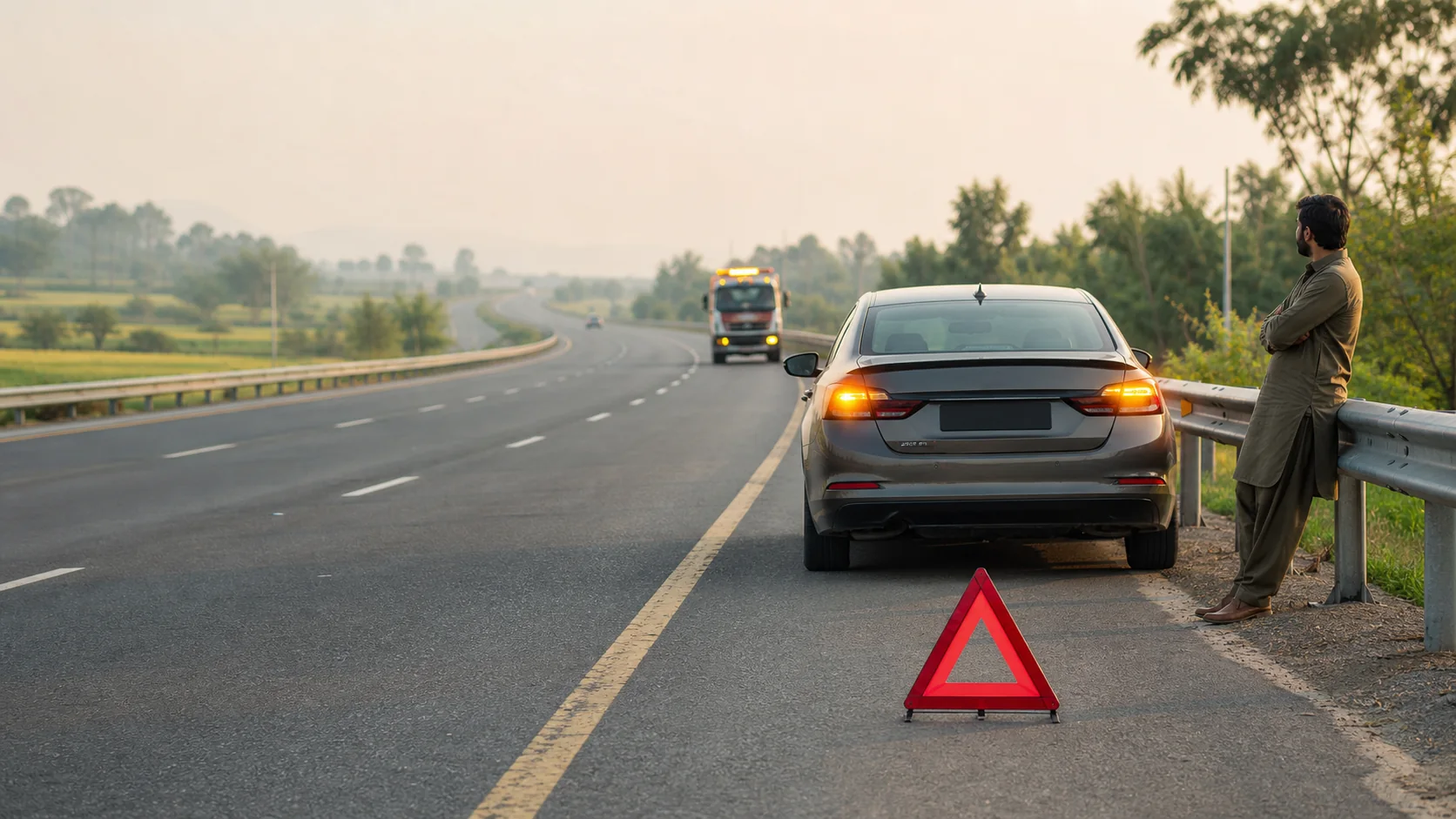
Stay calm and make safety your first priority. Do not attempt a repair in a live traffic lane. Use the following steps whenever your vehicle can no longer continue safely.
1. Move Away From Traffic
If the vehicle can still move, carefully take it onto the shoulder or another safe stopping place. Switch on hazard lights immediately. Avoid sudden braking or crossing several lanes.
2. Make the Vehicle Visible
Keep hazard lights on and use a reflective warning triangle only when it is safe to place one. At night, use parking lights and wear a reflective vest if available.
3. Wait in a Safer Position
Where possible, leave the vehicle from the side away from traffic and wait behind the safety barrier. Keep children and passengers together, away from the carriageway.
Prepare Before the Journey
Keep a Basic Roadside Emergency Kit
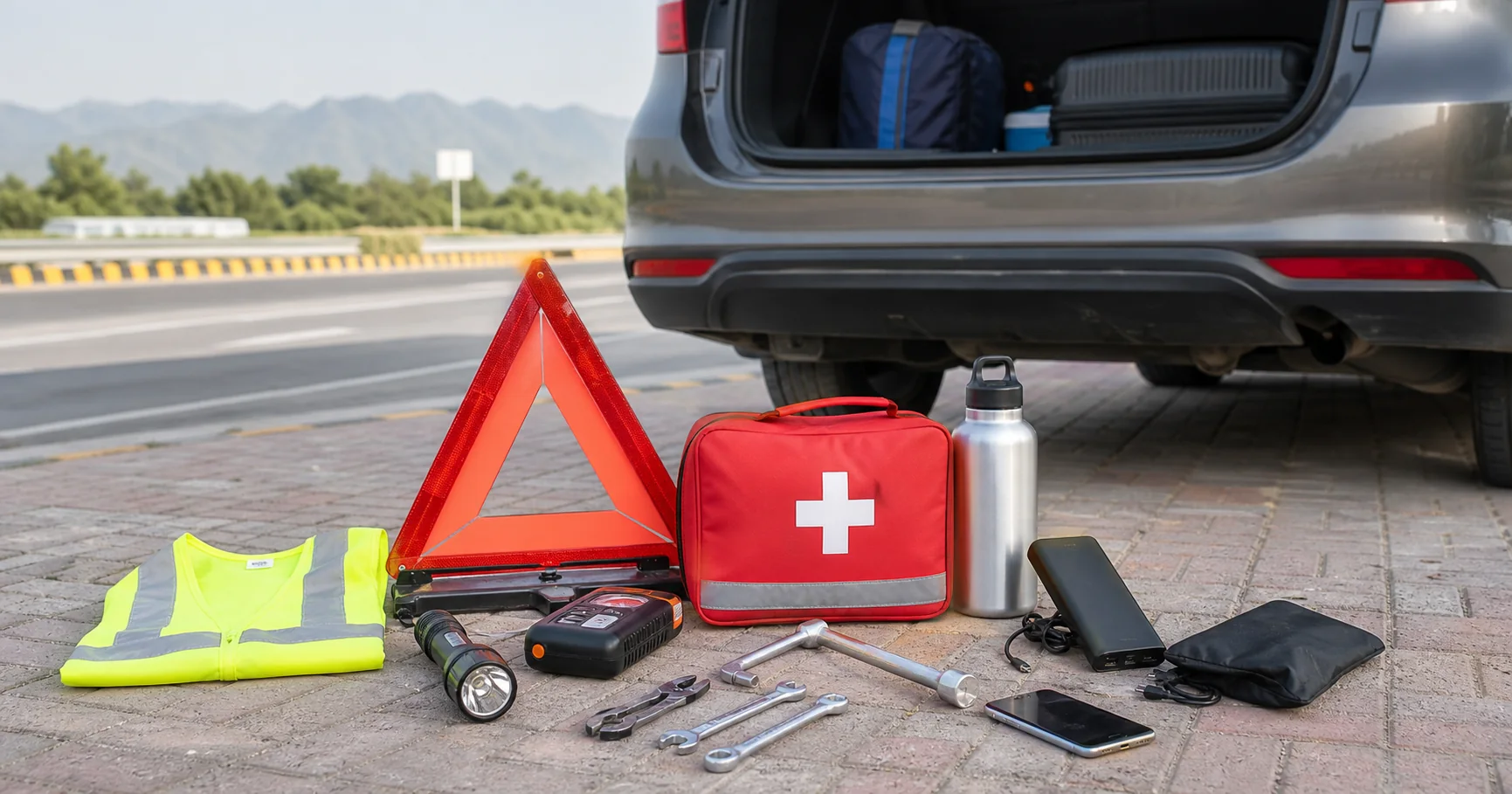
A small emergency kit can make a long wait safer and more comfortable. Check the kit before long journeys and replace expired or damaged items.
- Reflective warning triangle and high-visibility vest
- Working flashlight with spare batteries
- Charged power bank and phone cable
- First aid kit and drinking water
- Wheel tools, tyre inflator and pressure gauge
- Emergency contact details and vehicle documents
These items do not replace professional recovery equipment. Avoid working beneath a vehicle or attempting roadside repairs when traffic, weather or vehicle damage makes the situation unsafe.
Extra Care at Night, in Rain or After an Accident
Night-Time Breakdown
Visibility is limited at night. Keep lights on, avoid standing between vehicles and never walk along an active lane. Use your phone light only after reaching a protected position.
Rain and Poor Weather
Wet shoulders may be soft or slippery. Slow down gradually, increase distance from traffic and stay away from flowing water, unstable ground and low-visibility bends.
After an Accident
Check for injuries and contact the appropriate emergency authorities when required. Do not move an injured person unless immediate danger makes it necessary. Share accurate vehicle and location details with the recovery team.
Information to Share With the Recovery Team
Clear information helps the dispatcher understand your situation and arrange a suitable recovery vehicle. Send your WhatsApp live location when possible, or provide your motorway direction and nearest visible landmark.
- Your exact location or WhatsApp live location
- Direction of travel and nearest interchange or landmark
- Vehicle type, size and registration description
- Whether the vehicle can roll, steer or brake
- Any accident damage, loading or difficult position
- The destination where the vehicle must be delivered
Soon Valley Recovery operates 24/7 and supports cars, vans, trucks, LTV and HTV vehicles. The average response time is commonly 30 to 40 minutes, but actual arrival depends on traffic, weather, exact location and recovery vehicle availability.
Vehicle Stopped on the Road? Get to Safety and Contact Us
Call or WhatsApp your location, vehicle type and destination. Our team will check availability and guide you about the suitable recovery option.